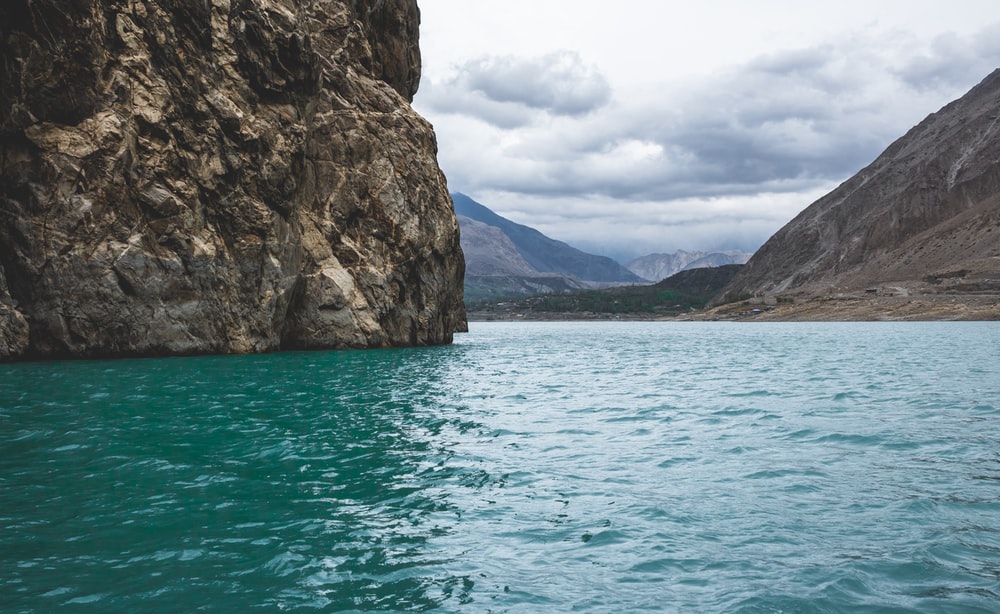
10 Unbelievable Facts about Attabad Lake in Pakistan.
Attabad Lake or Attabad Glacier is a glacial lake in the Hunza valley in Gilgit-Baltistan, Pakistan. The name ‘Attabad’ means ‘inaccessible’ in the local language, which aptly describes this beautiful tourist destination. Situated at an altitude of 4,100 meters above sea level, it is also known as “The Frozen Lake” and “The Prisoner” due to its natural barricade and challenging access. Attabad Lake is also famous for being one of the world’s most unusual lakes. It was formed after an earthquake released a landslide that blocked the Hunza River. As a result of this natural trap, the lake has no streamflow, no outflow and no detectable volume of water. This makes it one of the strangest lakes in the world!
10 Unbelievable Facts about Attabad Lake in Pakistan
Tourists are not allowed to visit the lake.
Due to heavy sedimentation and pollution, no aquatic life is found in the lake. The lake also has deadly bacteria that make it unsafe for tourists. Therefore, tourists are not allowed to visit the lake.
The lake is a 500-year-old glacier.
The Attabad Lake is actually an ancient glacier that got trapped between two mountains. Due to its gradual shift, the glacial ice got trapped between the two mountains, forming a glacial lake. With time, the glacier lost its volume, forming a lake.
The lake’s dam has caused severe damage to the valley.
Due to the construction of the Attabad Lake’s dam, the Hunza Valley suffered severe damage. The dam created a reservoir of water that has dried up many orchards in the valley. However, the Hunza Fruit and Vegetable Growers Association has challenged the government’s decision stating that the orchards have dried up due to natural reasons.
The reservoir behind the dam has dried up many orchards.
The dam created a reservoir of water that has dried up many orchards in the valley. Moreover, the dam has also affected many species of fish and aquatic life. The dam has also caused landslides in the valley, making the area risky and dangerous for the locals.
Sedimentation is the biggest problem of this man-made lake.
The lake has a very low rate of inflow, which has led to very high rate of outflow. Due to this, the lake is heavily loaded with sedimentation, posing a great risk to the area. The lake has also impacted the biodiversity of the surrounding area.
Attabad Lake is home to a unique species of fish called Rohu.
The lake is home to a species of fish called Rohu. These fish are also called Indian salmon and belong to the family of salmonids. Rohu is a widely consumed freshwater fish in the Indian subcontinent.
Conclusion
The Attabad Lake is a glacial lake that was formed after an earthquake released a landslide that blocked the Hunza River. Due to its low rate of inflow and high rate of outflow, the lake is heavily loaded with sedimentation and pollution.
The lake has also impacted the biodiversity of the surrounding area. It is also home to a species of fish called Rohu. These fish are also called Indian salmon and belong to the family of salmonids.